Below are web sites. But today most organize walks through Meetups. A search on Meetup finds more than one can count. Many mushroom clubs are listed on North American Mushroom Clubs.
Clicking on a thumbnail image will get you a larger image. To open a book in a new tab (easier for comparisons) hold down the Ctrl key when you click the link. It once was in order by Amazon rank.
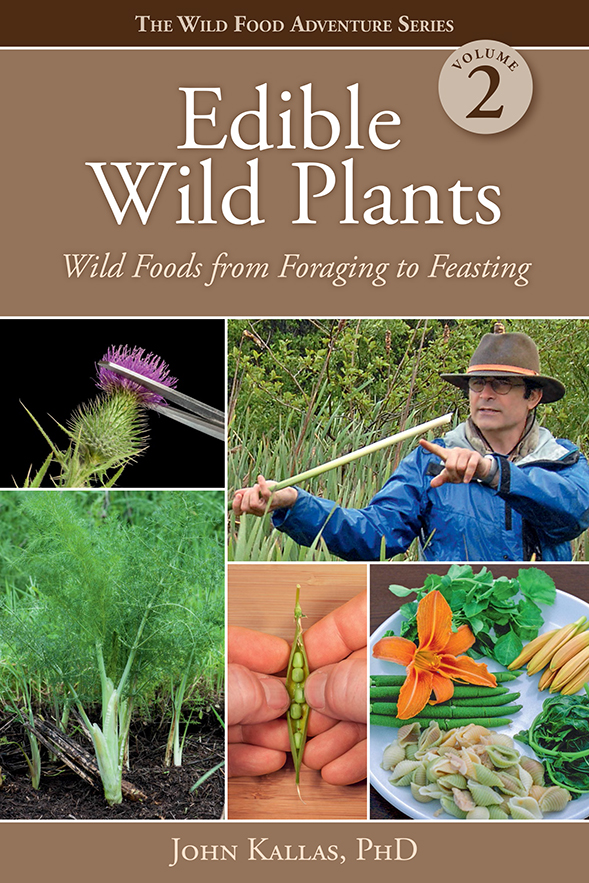 Edible Wild Plants: Wild Foods from Foraging to Feasting is the second book by John Kallas in the Wild Food Adventure Series. Like the first, it is a user-friendly, pictorially based guide providing all you need to know to start genuinely enjoying wild foods. It helps readers successfully identify plants, develop gathering strategies, and learn preparation and cooking techniques.
 The Bay Area Forager: Your Guide to Edible Wild Plants of the San Francisco Bay Area by Mia Andler and Kevin Feinstein provides descriptions of where to find each of the region's most readily available plants, and gives clear instructions for harvesting them responsibly.
 The Sierra Forager: A Map to the Sierra Nevada's Most Delicious Offerings by Mia Andler is a high-elevation companion guide to Andler's The Bay Area Forager, puts celebrated regions such as Yosemite, Lake Tahoe, and Mammoth directly onto your plate. The book guides readers to safely, ethically, and deliciously forage.
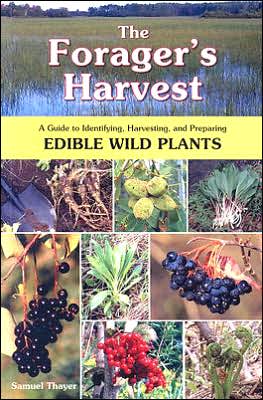 The Forager's Harvest: A Guide to Identifying, Harvesting, and Preparing Edible Wild Plants by Samuel Thayer is a practical guide to all aspects of edible wild plants: finding and identifying them, their seasons of harvest, and their methods of collection and preparation. Each plant is discussed in great detail and accompanied by excellent color photographs. Includes an index, illustrated glossary, bibliography, and harvest calendar.
 A Field Guide to Medicinal Plants and Herbs: Of Eastern and Central North America (Peterson Field Guide Series) by James A. Duke. This new edition shows how to identify more than 500 healing plants. Descriptive text includes information on where the plants are found, as well as their known medicinal uses. An index to medical topics, symbols next to plant descriptions, and organization of plants by colors.
 Nature's Garden: A Guide to Identifying, Harvesting, and Preparing Edible Wild Plants by Samuel Thayer. A detailed guide to all aspects of using edible wild plants, from identifying and collecting through preparation. Covers 41 plants in-depth and the text is accompanied by multiple color photos. (Plants not covered in his first book.) The meat of the book is made up of plant accounts. These are in-depth profiles of edible plants, full of photos of how to identify, harvest and use them. The Amazon reviews average to 5 stars. Published April 2010.
 A Field Guide to Edible Wild Plants: Eastern and Central North America (Peterson Field Guide Series) by Lee Allen Peterson and Roger Tory Peterson is one of the classics. More than 370 edible wild plants, plus 37 poisonous look-alikes, are described here, with 400 drawings and 78 color photographs showing precisely how to recognize each species. Also included are habitat descriptions, lists of plants by season, and preparation instructions for 22 different food uses.
 Edible Wild Plants: Wild Foods From Dirt To Plate (The Wild Food Adventure Series, Book 1) by John Kallas includes extensive information and recipes on plants from the four categories: foundation greens, tart greens, pungent greens, and bitter greens. Has maps, simple explanations, and multiple sharp close-up photographs of every plant covered at every important stage of growth. You learn that a plant is not only edible but when, why, and how it is. Includes recipes. The only negative review feels the title should make it clear that the book is only about edible greens. The Amazon reviews average to 5 stars. Published June 2010. [Kindle edition available.]
 Foraged Flavor: Finding Fabulous Ingredients in Your Backyard or Farmer's Market, with 88 Recipes by Tama Matsuoka Wong and Eddy Leroux. Tama Matsuoka Wong is the forager for restaurant Daniel in NYC. Eddy Leroux is the restaurant's chef de cuisine. The book covers only the wild plants that are worth seeking out for their fabulous flavors. And then they tell how best way to prepare each ingredient. All Amazon reviews are 5 stars. Published June 2012. [Kindle edition available.]
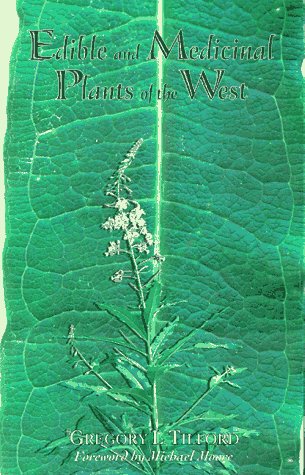 Edible and Medicinal Plants of the West by Gregory L. Tilford. Full-color photographs face detailed descriptions of 250 plant species in the western United States and Canada, covering field identification, habitat and range, edibility, medicinal uses, and more. The Amazon reviews average to 4+ stars.
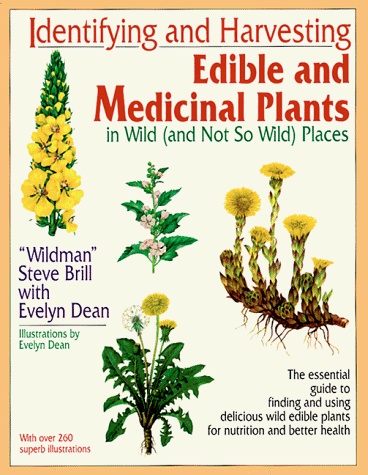 Identifying and Harvesting Edible and Medicinal Plants in Wild (And Not So Wild Places) by "Wildman" Steve Brill shows readers how to find and prepare more than five hundred different plants. More than 260 detailed line drawings. No color pictures, which upsets buyers expecting them. This book is both a field guide to nature's bounty and a source of intriguing information about the plants that surround us.
 Edible Wild Plants: A North American Field Guide to Over 200 Natural Foods by Thomas Elias and Peter Dykeman. This updated edition of the must-have field guide now features nearly 400 color photos and detailed information on more than 200 species of edible plants all across North America. Plants are organized by season. Each entry includes images, plus facts on the plant's habitat, physical properties, harvesting, preparation, and poisonous look-alikes. The introduction contains recipes and a quick-reference seasonal key for each plant.
 While Newcomb's Wildflower Guide by Lawrence Newcomb is not foraging, but it's another that belongs in a forager's book collection.
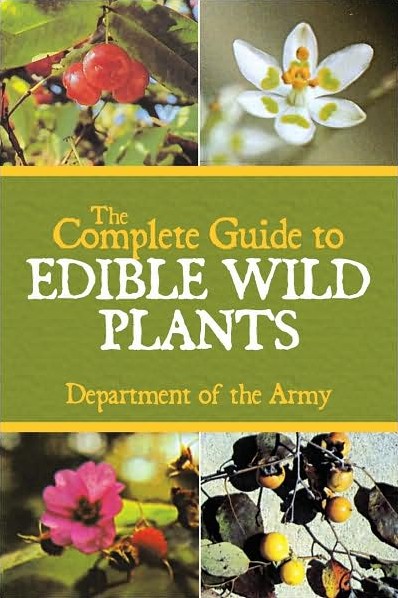 The Complete Guide to Edible Wild Plants by Department of the Army. Written for survival situations. The book describes habitat and distribution, physical characteristics, and edible parts of wild plants -- the key elements of identification. Also, methods of preparation are suggested for taste and variety. Reviews are mixed. [Kindle edition available.]
 Foraging New England: Finding, Identifying, and Preparing Edible Wild Foods and Medicinal Plants from Maine to Connecticut by Tom Seymour guides you to the edible wild foods and healthful herbs of the Northeast. Organized by environmental zone, this valuable reference guide will help you identify and appreciate the wild bounty of New England. Inside you'll find: detailed descriptions of edible plants and animals; tips on finding, preparing, and using foraged foods; a glossary of botanical terms; eighty-seven color photos.
 A Field Guide to Venomous Animals and Poisonous Plants: North America North of Mexico (Peterson Field Guide Series) by Roger Caras and Steven Foster. This essential guide to safety in the field features more than 250 poisonous plants and fungi and 90 venomous animals. The 340 line drawings make identification fast and simple; 160 species are also illustrated with color photographs.
 Stalking The Wild Asparagus [Deluxe Edition] by Euell Gibbons was first published in 1962. It is the classic on foraging from the original forager.
 A Field Guide to Trees and Shrubs: Northeastern and North-central United States and Southeastern and South-central Canada (The Peterson Field Guide Series) by Roger Tory Peterson, while not a foraging book per se, it is most useful to have along for general identification. There are other editions for those living elsewhere.
 Edible and Medicinal Plants of the Rockies by Linda Kershaw. Learn about the edible and medicinal characteristics of 333 of the most common plant species of the Rockies. This book includes accounts of how the plants were used by Native Americans and early European settlers.
 Wild Cards: Edible Wild Foods (All Ages) [Cards] by Linda Runyon. A playing card deck by Linda Runyon, with photos and descriptions of 52 different edible plants. Ideal for hikers, campers, survival experts, and gourmet cooks. Includes key chain for easy portability. These can be used as a secondary, but not primary source of information. The Amazon reviews average to 4+ stars.
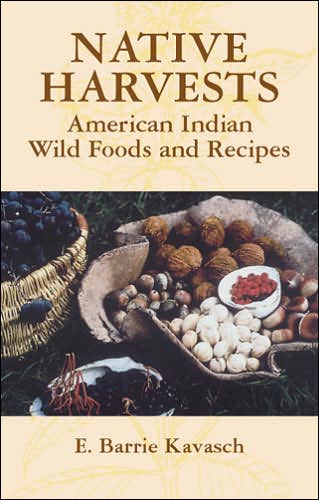 Native Harvests: American Indian Wild Foods and Recipes by E. Barrie Kavasch. Practical primer on natural foods not only provides recipes for varied Native American dishes but also describes uses of ceremonial, medicinal, and sacred plants. From clambakes to wild strawberry bread, the volume is simultaneously a field guide, cookbook, and useful manual on herbal remedies. Has perfect 5 star rating.
 Field Guide to Edible Wild Plants by David Foster and Bradford Angier. This illustrated guide to North American wild edibles has been a nature classic for over thirty years. In this new edition, David K. Foster revises Bradford Angier's invaluable foraging handbook, updating the taxonomy and adding more than a dozen species. Scientific information for a general audience and full-color illustrations combine with intriguing accounts of the plants' uses, making this a practical guide for modern-day foragers. Reviews are mixed. It is in alphabetical order. It is conveniently small, but that limits the illustrations.
 Edible Wild Plants: A North American Field Guide by Thomas Elias and Peter Dykeman is a season-by-season guide to identification, harvest, and preparation of more than 200 common edible plants to be found in the wild.
 Tom Brown's Guide to Wild Edible and Medicinal Plants (Field Guide) by Tom Brown. This book assumes you already know how to find the plant. There is only text. Every plant has a "personality," which is an account of the author's personal experience with the plant, childhood memories related to the plant, and teachings he got from an Apache elder. Then how the plant can be used as food and as medicine. He shows how the plant should be harvested, cooked, eaten, stored, prepared and prescribed. He points to possible dangers if a particular plant can be easily confused with a toxic plant, or when a plant could trigger reactions in allergic people.
 The Essential Wild Food Survival Guide by Linda Runyon. The book is profusely illustrated by the author. You will learn how to identify, gather, prepare, store and enjoy wild food. The book is full of data, charts, nutritional breakdowns, and a poisonous look-alike section. There are many clear black & white photos as well as line drawings for identification. Includes recipes. The majority of the plants are found in all 50 states. A few are unique to the East or the West US. All Amazon reviews give the book 5 stars.
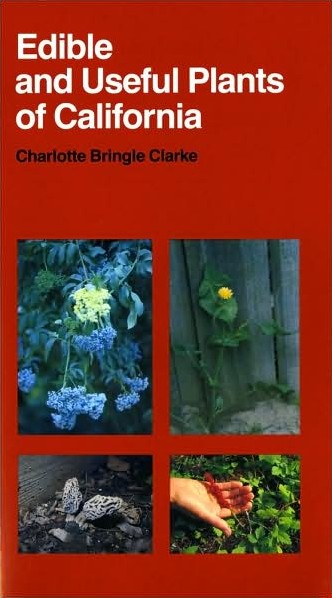 Edible and Useful Plants of California (California Natural History Guide) by Charlotte Bringle Clarke is a fun and easy to use guide that covers more than 220 plant species-for food, fibers, medicine, tools, and other purposes. It also tells how to prepare, cook, and otherwise use them. About a hundred species are edible. No color pictures. The Amazon reviews average to 4+ stars.
 Wild Edible Plants of Western North America by Donald R. Kirk. Nearly 2000 species of wild edible plants found in the western United States and in southwestern Canada and northwestern Mexico are covered. Identifying illustrations are not in color.
 The Illustrated Guide to Edible Wild Plants by Department of the Army. It helps you identify plants, other than by memorizing particular varieties through familiarity, by using such factors as leaf shape and margin, leaf arrangements, and root structure. [Kindle edition available.]
 Stalking The Healthful Herbs by Euell Gibbons is a 1966 classic guide. It is a down home book that passes on folk wisdom and botany in a delightful way. Some prefer this book to "Asparagus" because it is a bit more useful.
 Common Edible and Useful Plants of the West (Outdoor and Nature) by Muriel Sweet covers how the Indians, pioneers, and early Spanish-Americans used many of the common wild plants for food, building shelters, or making artifacts. Remedies are included. The single Amazon review points out that this small and lightweight book only covers the most important and common edible plants of the West. The plants in this book are categorized according to trees, shrubs, vines, herbs, and water plants. The sketches are only average.
 Edible Wild Plants: An Introduction to Familiar North American Species (North American Nature Guides) by James Kavanagh and Raymond Leung is a guide to berries, nuts, leaves and plants found in North America. Detailed color illustrations and groupings help identify edible vegetation. Printed on laminate material and folded for easy storage and retrieval.
 The Wild Table: Seasonal Foraged Food and Recipes by Connie Green & Sarah Scott features more than forty wild mushrooms, plants, and berries- from prize morels and chanterelles to fennel, ramps, winter greens, huckleberries, and more. Grouped by season (including Indian Summer), the recipes provide step-by-step cooking techniques, explain how to find and prepare each ingredient, and feature several signature dishes from noted chefs. Each section also features enchanting essays capturing the essence of each ingredient, along with stories of foraging in the natural world. With gorgeous photography throughout, this book will appeal to any serious gatherer, but it will also transport the armchair forager and bring to life the abundant flavors around us. The Amazon reviews are all 5 stars.
 Edible Wild Plants and Herbs: A Pocket Guide by Alan M. Cvancara. Informative, but photos are not in color. A tutorial on preparing plants to eat and finding fresh water for cooking, as well as lists of common poisonous plants to avoid. [Kindle edition available.]
 The Illustrated Guide to Edible Wild Plants by Department Army. Written for survival situations. The book describes the physical characteristics, habitat and distribution, and edible parts of wild plants. With color photography throughout, this guide facilitates the identification of these plants. [Kindle edition available.]
 Edible Wild Plants of the Prairie: An Ethnobotanical Guide by Kelly Kindscher. Lots of prairie grasses here. The book is organized alphabetically by scientific name. The book provides line drawings, distribution maps, and botanical and habitat descriptions. The ethnobotanical accounts of food use form the major portion of the text, but there is also information on the parts of the plants used, harvesting, propagation (for home gardeners), and the preparation and taste of wild food plants.
 The Encyclopedia of Edible Plants of North America: Nature's Green Feast by Francois Couplan is one of the ones you want on your bookshelf.
 The North American Guide to Common Poisonous Plants and Mushrooms by Nancy J. Turner and Patrick von Aderkas is a comprehensive handbook suited for a coffee table. The book is split into four main categories: mushrooms, wild plants, ornamental and crop plants, and houseplants. Each plant entry includes a clear photograph to aid the task of identification, a description of the plant, notes on where they commonly occur, and a description of their toxic properties. Plants are listed by common name to assist the non-specialist. The Amazon reviews average to 4 stars. Revised edition April 29, 2009. [Kindle edition available.]
 Trout Caviar: Recipes for a Northern Forager by Brett Laidlaw. The author shares tips and recipes for foods available in northern climates, like Minnesota and Wisconsin. Included are truly wild foods–chanterelles, nettles, berries, trout fresh from the stream. The book also includes practical information about mushroom hunting, curing bacon, laissez-faire gardening, and more. The author's blog. Published September 15, 2011.
 Edible Wild Plants of Pennsylvania and Neighboring States by Mary Lee Medve and Richard J. Medve contains information for the identification of more than 100 wild plants. Each plant entry provides characteristics, habitat, distribution, edible parts, food uses, precautions, preparation, recipes, and interesting remarks about the plant's botanical history. The plants are arranged according to height. Each plant is also cross-referenced by common and scientific names. They also provide a list of toxic look-alikes, a nutrient composition chart, and a glossary of terms.
 Foraging: Self-Sufficiency by David Squire. The book is divided into wild plants, herbs, fruits, nuts, mushrooms, seaweeds, and shellfish. The book has all of the information you need as well as clear instructions to help you identify the plants. 100 color illustrations.
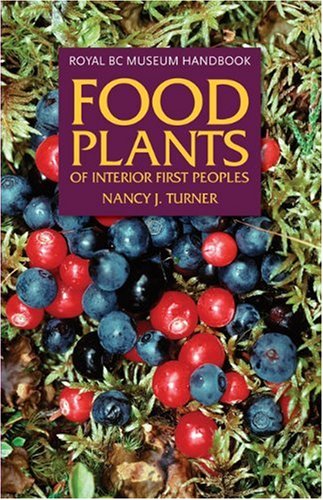 Food Plants of Interior First Peoples (Royal BC Museum Handbook) by Nancy J. Turner describes more than 150 plants traditionally harvested and eaten by First Peoples east of the Coast Mountains in British Columbia and northern Washington. It explains how they harvested, prepared and preserved the roots, leaves, fruits and other parts of wild plants. The book also describes some non-native food plants used and several species considered poisonous or inedible. Color pictures enhance descriptions and make identification easier. All Amazon reviews give it 5 stars. Published January 1, 2010.
 Fat of the Land: Adventures of a 21st Century Forager by Langdon Cook. Langdon, a neophyte forager, is a smart funny storyteller. He celebrates the bounty of the land and sea through the pleasure of foraging. Recommended. [Kindle edition available.]
 The Foraging Gourmet by Katie Letcher Lyle is a field guide and cookbook. For 55 edibles, you learn what to look for, supported by drawings and some color photos, plus history, lore, and a recipe or two for each wild treasure. Written for an American audience, it can also serve foragers in Canada and, to some degree, Europe, as it includes mushrooms, fruits, and greens found in this milieu as well.
 The Wild Vegetarian Cookbook by "Wildman" Steve Brill starts by introducing wild and purchased natural foods and basic methods for preparing them. He gets into seasonings, tips on adapting natural ingredients to traditional cooking methods and explains how to harvest wild foods safely.
 A Survival Acre: 50 Worldwide Wild Foods & Medicines by Linda Runyon. The book is a primer for living off the land. The book was published back in 1985. Her later books have more science and research. The Amazon reviews average to 4 stars.
 The Complete Guide to Edible Wild Plants, Mushrooms, Fruits, and Nuts: How to Find, Identify, and Cook Them by Katie Letcher Lyle. An illustrated field guide to the most common edible wild plants, with recipes. Reviews say not so complete and is lacking in warnings.
 Anne Gardon's The Wild Food Gourmet has more than 100 recipes. Scroll down for a review at Galloping Gourmets.
 Basic Essentials Edible Wild Plants and Useful Herbs, 3rd (Basic Essentials Series) by Jim Meuninck. An introductory guide to some of the common plants you'd encounter throughout the United States and Canada. The book has glossy color pictures, descriptions, locations, cooking tips, and medicinal uses for each plant. It spotlights warnings for the plants that may be poisonous if not used properly, or if they have toxic look-alikes. Has a list of rules to consider when foraging for wild foods. Includes recipes. There is also a 2nd Edition.
 Harvesting Nature's Bounty 2nd Edition: A Guidebook of Wild Edible, Medicinal and Utilitarian Plants, Survival, and Nature Lore by Kevin F. Duffy. A treasure trove of nature wisdom and lore. It not only covers wild edible and medicinal plants, and survival skills, it also covers subjects as varied as fish stunners, weather predictors, cricket temperature, pine pitch glue, natural bug repellents, and a wide variety of exciting new culinary sources.
 Weed 'Em and Reap: A Weed Eater Reader by Roger Welsch. A humorous book about the weeds in your yard you can eat, but it gets mixed reviews at Amazon. [Kindle edition available.]
 Wild Edible Fruits and Berries by Marjorie Furlong & Virginia Pill. Useful throughout the United States and Canada, this book contains full color photographs and detailed descriptions for 42 wild edible fruits and berries. Locations are given and conservation principles encouraged. Has a recipe section.
 The Rocky Mountain Wild Foods Cookbook by Darcy Williamson describes twenty-eight plants common to the region and provides an extensive selection of recipes using these delicacies from nature's garden. All emphasize health-conscious cooking, using fresh ingredients with low sugar and fat content.
 Foraging: Discover Free Food from Fields, Streets, Gardens and the Coast by Paul Chambers. The book covers all parts of the British countryside, including urban environments and the seashore. The book offers a guide for beginners and experienced foragers as well as those with a general interest in the natural and cultural history of edible plants. Highly illustrated, the guide also includes a seasonal calendar and a handy A-Z of edible plants. It was published April 2011.
 Lifelong forager Robert Henderson has written The Neighborhood Forager: A Guide for the Wild Food Gourmet.
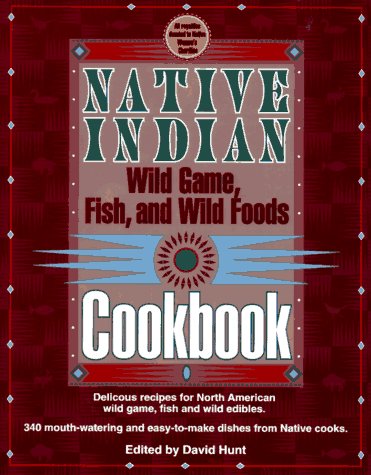 Native Indian Wild Game, Fish, and Wild Foods Cookbook: New revised and expanded edition
by Lovesick Lake Native Women's Association. Native America cookbook filled with cultural facts and tidbits. Over 340 recipes for wild edibles, fruits, fish and seafood, venison, small and big game. Gathered from Zuni, Pueblo, Cherokee, Tlingit, Ojibway and other tribes across North America and updated for the modern cook.
Native Indian Wild Game, Fish, and Wild Foods Cookbook: New revised and expanded edition
by Lovesick Lake Native Women's Association. Native America cookbook filled with cultural facts and tidbits. Over 340 recipes for wild edibles, fruits, fish and seafood, venison, small and big game. Gathered from Zuni, Pueblo, Cherokee, Tlingit, Ojibway and other tribes across North America and updated for the modern cook.
 Thistle Greens and Mistletoe: Edible and Poisonous Plants of Northern California by James S. Wiltens. No description or reviews at Amazon.
 Wild Edible Plants of New England: A Field Guide, Including Poisonous Plants Often Encountered by Joan Richardson. No description or reviews at Amazon.
 Edible Wild Plants by Perry Medsger Oliver. This is a reprint of an early book.
 Amazon has nice searching capabilities. One good one is a search on wild edible plants.
The below is just a sampling of the many mushroom foraging books. Amazon has a list of the Bestsellers in Mushrooms, though it includes more than foraging. In order by Amazon rank.
 If you forage for mushrooms, Mushrooms Demystified by David Arora is the reference you want to have back home (and it is heavy).
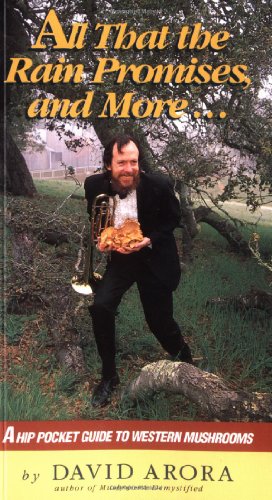 All That the Rain Promises and More: A Hip Pocket Guide to Western Mushrooms by David Arora. This is the best selling book on mushroom foraging. Lots of colorful photos. This is the digest version of his big book. It covers Colorado and west of it. The many Amazon reviews average to 5 stars.
 If you forage for mushrooms, National Audubon Society Field Guide to North American Mushrooms (National Audubon Society Field Guides) by Gary H. Lincoff is the one you want to bring with you in the field.
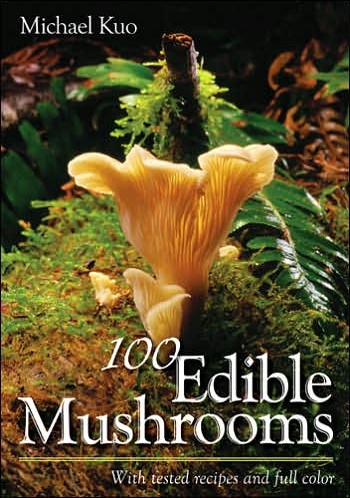 100 Edible Mushrooms by Michael Kuo selects the top 100 mushrooms best suited for cooking. The book describes in detail how to identify each species, where and when to find them, and how to cook them in creative and delicious recipes. The Amazon reviews average to 4+ stars.
 David Spahr now has a book Edible and Medicinal Mushrooms of New England and Eastern Canada. Info about his classes is in an above section.
 A Field Guide to Mushrooms: North America (Peterson Field Guide) by Kent H. McKnight and Vera B. McKnight. More than 1,000 species of mushrooms described in detail. Over 700 paintings and drawings reveal subtle field marks that cannot be captured into photographs. This is a 20 year old classic. It is good for beginners.
 The Complete Mushroom Hunter: An Illustrated Guide to Finding, Harvesting, and Enjoying Wild Mushrooms by Gary Lincoff. With an anecdotal style of writing the author covers his mushroom lifestyle and experiences. It covers the history of mushroom hunting worldwide with lots of high quality photos. Includes: How to get equipped for a mushroom foray, where to find them, how to identify them, and how to prepare and serve the fruits of your foray, plus more than 30 recipes. Published August 1, 2010.
 Psilocybin Mushrooms of the World: An Identification Guide by Paul Stamets. The only identification guide exclusively devoted to the world's psilocybin-containing mushrooms. Detailed descriptions and color photos for over 100 species are provided, as well as an exploration of their long-standing use by ancients and their continued significant to modern-day culture. The Amazon reviews average to 5 stars.
 Mushrooming without Fear: The Beginner's Guide to Collecting Safe and Delicious Mushrooms by Alexander Schwab focuses only on those types that are both safe to eat and delicious. Most important, it presents the eight rules of mushroom gathering in a straightforward fashion–including "Never, never take a mushroom with gills" and "If a mushroom smells rotten, it is rotten." Among the many mushrooms covered are the cep; the red-cracked, larch, bay, and birch boletes; hen of the woods, chanterelle, trumpet chanterelle, hedgehog fungus, common puffball, horn of plenty, and cauliflower mushroom. Each is identified with several color photographs and identification checklist, and there's also information on mushroom season, handling, storage, and cooking, complete with recipes. Reviewers point out that many good mushrooms are not included and the book is very much for beginners. [Kindle edition available.]
 Mushrooms and Other Fungi of North America by Roger Phillips. The introduction includes information on mushroom poisoning and handling of mushrooms and generic beginner's keys. Includes glossary. The descriptions of each species include geographic range and fruiting season and a statement of poison danger or a comment on edibility. The new version lacks the bibliography. There are over 1000 photographs, but the quality of them is not as good as in the 2005 hardcover edition. The Amazon reviews average to 4+ stars. Paperback published September 23, 2010.
 Mushrooms of the Pacific Northwest: Timber Press Field Guide by Steve Trudell and Joe Ammirati. This compact, illustrated guide presents descriptions and photographs of 460 of the region's most important mushrooms. The geographic range covered by the book includes Oregon, Washington, southern British Columbia, Idaho, and westernmost Montana, with an emphasis on the heart of mushroom country: the low- to mid-elevation forest habitats of western Oregon and Washington. In addition to profiles on individual species, Mushrooms of the Pacific Northwest also includes a general discussion and definition of fungi; information on where to find mushrooms and guidelines on collecting them; an overview of fungus ecology; and a discussion on mushroom poisoning and how to avoid it. The Amazon reviews average to 3+ stars. Published July 22, 2009. [Kindle edition available.]
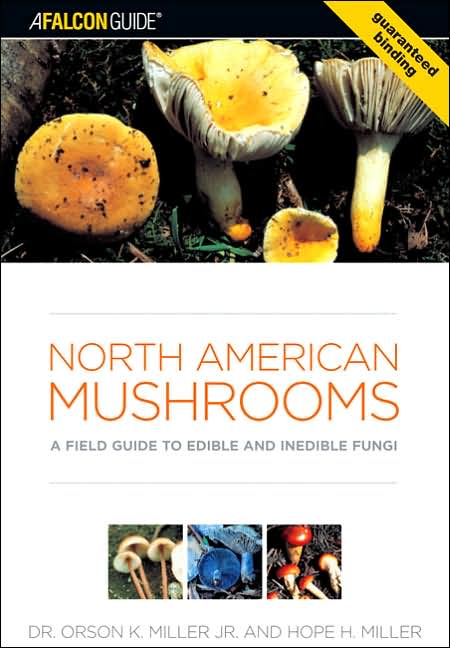 North American Mushrooms: A Field Guide to Edible and Inedible Fungi (Falconguide) by Dr. Orson K. Miller Jr. and Hope Miller. This is a field guide with more than 600 brilliant color photographs, detailed line drawings, informative and illuminating descriptions, and critical identification keys. This comprehensive book for expert and amateur alike offers tips on how, where, and when to collect wild mushrooms; suggestions for culinary uses; a section on mushroom toxins; and pictorial keys and glossaries to aid the user in precise identification. Identification key is based upon spore printing. It exclusively uses scientific names (Latin). Common names get only a passing mention and are often not included in the index. The Amazon reviews average to 4 stars.
 Morels by Michael Kuo includes extensive information on the art of hunting morels and on current scientific knowledge regarding these delectable fungi. In addition, Kuo compiles easy-to-understand information on the latest scientific research into morels, from studies into how they grow to DNA-based classification of species. With over two hundred color photographs. The Amazon reviews average to 5 stars.
 North American Boletes: A Color Guide to the Fleshy Pored Mushrooms by Alan Bessette and Arleen Bessette. The book features species descriptions, easy to follow keys that emphasize macroscopic features for eastern and western North America and information on collecting, cooking and preserving boletes. The photographs are excellent and the information is precise and scientific. Some criticize it for being too technical or difficult to understand. It is not recommended for beginners. The Amazon reviews average to 4 stars. Published June 30, 2010.
 Mushroom Picker's Foolproof Field Guide: The expert guide to identifying, picking and using wild mushrooms by Peter Jordan. This handy volume begins with a short introduction explaining everything a mushroom picker needs to know, followed by a fully-illustrated A-Z guide in which the author describes the identifying features and habitats of edible and inedible mushrooms. Publication Date: September 16, 2010.